Action-Driven Consulting: Transform Your Operations
Reports gather dust. Change happens on the floor. Here's how action-driven consulting turns analysis into measurable improvement — fast.
Too many consulting engagements end the same way: a thick slide deck, a polite handshake, and an operation that works exactly as it did before. The diagnosis was accurate, the recommendations were sensible — and nothing changed. Action-driven consulting exists to break that pattern. Instead of studying your operation from the outside, we improve it from the inside, together with your people, in real time.
Why traditional consulting stalls
The classic model separates thinking from doing. Analysts study the process, produce recommendations, and hand them to the organisation to implement. But implementation is where 80% of the difficulty lives. By the time the report lands, the team that has to execute it wasn’t part of the reasoning, doesn’t own the conclusions, and quietly resists the change. In Lean terms, a report that never becomes action is pure muda — waste of the most expensive kind.
Analysis is the start, not the deliverable
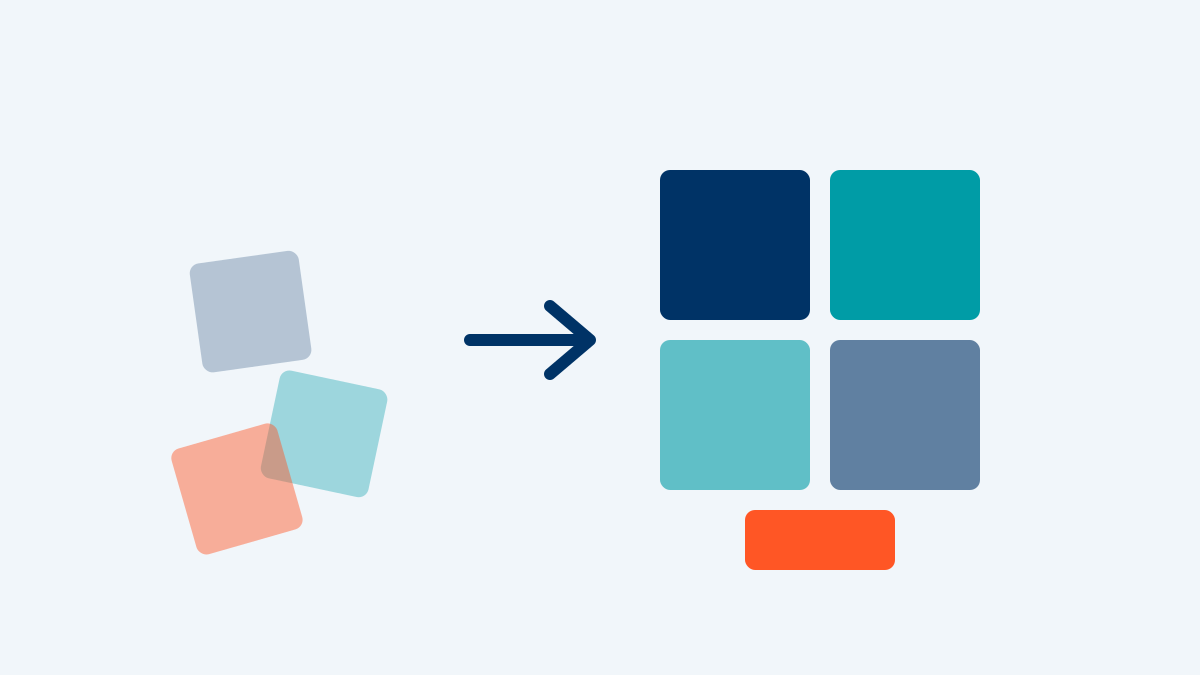
Diagnosis still matters. You need to know where waste hides, which processes drag, and where the constraint really is. But analysis only earns its keep when it triggers action. We keep the study phase short and anchored to one question: what will we change, and how will we know it worked? A value stream map that doesn’t lead to a redesigned flow within weeks is decoration.
Improve on the gemba
Real change happens where the work happens — the gemba. That’s why we map value streams with the operators who run them, not in a conference room. We test improvements on the floor, at small scale, the same week they’re proposed. A layout change is mocked up with tape and cardboard before anyone orders equipment. A new standard is trialled on one line, one shift, before it becomes policy.
This is the PDCA discipline — Plan, Do, Check, Act — running on a weekly cycle instead of an annual one. Small, fast experiments beat big, slow programs for three reasons:
- Risk drops. A failed experiment costs a week, not a budget.
- Learning compounds. Every cycle teaches the team something true about their own process.
- Momentum builds. Visible wins recruit the sceptics faster than any kickoff meeting.
Measure what the customer feels
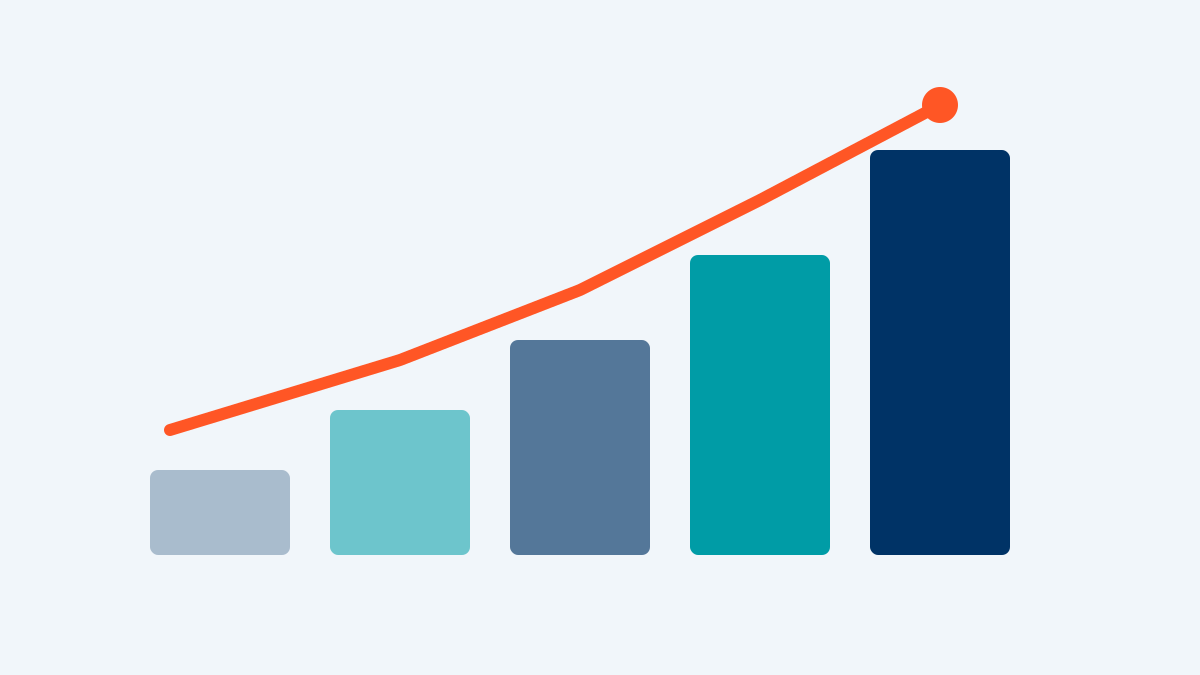
Action-driven work is honest work: every change is tied to a measurable outcome — lead time, first-pass quality, on-time delivery, freed-up cash. Not “workshop satisfaction scores.” If the customer can’t feel the difference and the P&L can’t see it, we don’t count it.
Leave capability behind
The deepest goal isn’t the first result — it’s the capability that produces the next hundred results. Every engagement is structured to transfer skill: your team leads run the improvement events by the end, your managers run the daily performance dialogues, your operators propose the next round of kaizens. When we leave, the improvement engine stays.
Less waste. More flow. Measurable results. That’s what action-driven consulting delivers — and it’s why our clients keep improving long after the project ends.